A Practical Guide for Data Protection Impact Assessments (DPIAs)
Updated: August 2026
If you’ve ever delved into data protection, you’ve likely come across the term Data Protection Impact Assessment (DPIA). But what exactly does it mean, and what does it involve? In this guide, we’ll explore what DPIAs are and why they matter. We’ll walk you through the steps to conduct a DPIA, from identifying the need to implement safeguards. We’ll also discuss common challenges you might face when doing a DPIA and share best practices to overcome them. By the end, you’ll have a clear understanding of how to use DPIAs to enhance your data protection efforts and minimise risks to personal information.
What is a DPIA?
A Data Protection Impact Assessment (DPIA) is a process we use to identify and minimise data protection risks. It’s a key part of our accountability under the GDPR and helps us comply with our data protection obligations. We use DPIAs to systematically analyse, identify, and reduce a project or plan’s data protection risks.
What are the benefits of conducting a DPIA?
DPIAs are more than just a box-ticking exercise. They’re a living process that helps us manage and review data-processing risks on an ongoing basis. By doing a DPIA, we improve our awareness of the data protection risks associated with a project, which in turn helps us improve its design and communicate privacy risks to stakeholders.
How do I know if I should conduct a DPIA?
We’re required to conduct a DPIA when our processing is likely to result in a high risk to individuals’ rights and freedoms. This is particularly relevant when we introduce new data processing technology.
Here are some specific situations where a DPIA is mandatory:
1. Systematic and extensive profiling with significant effects
2. Large-scale use of sensitive data
3. Public monitoring
It’s also good practice to conduct a DPIA for any major project involving personal data. If we fail to carry out a DPIA when required, we could face enforcement action, including a fine of up to £8.7 million or 2% of our global annual turnover, whichever is higher.
Key Components of a DPIA
A DPIA should include several key elements:
1. A description of the processing operations and purposes
2. An assessment of the necessity and proportionality of the processing
3. An assessment of the risks to individuals’ rights and freedoms
4. The measures we plan to take to address these risks
Let’s break these down further:
Description of Processing
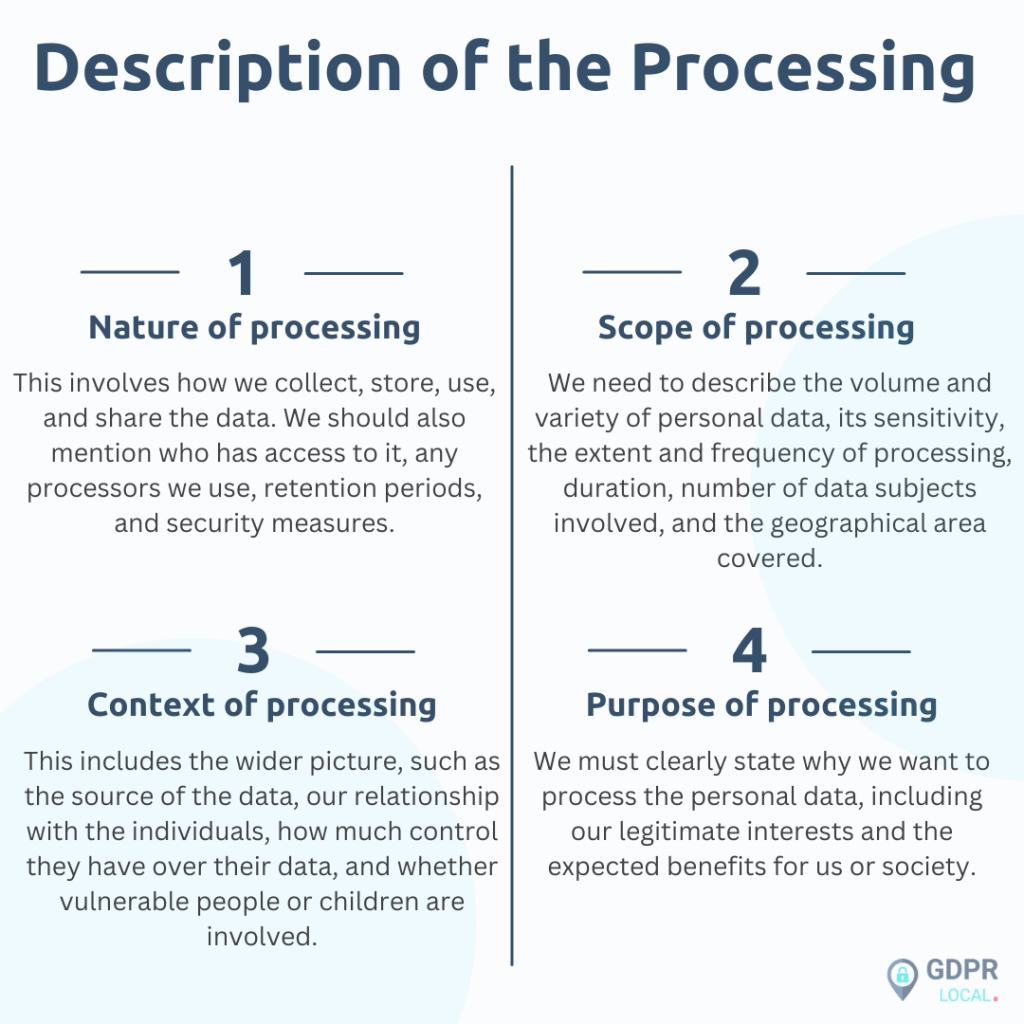
This includes the nature, scope, context, and purposes of the processing. We need to consider how we collect, store, use, and share the data, who has access to it, and whether we’re using any new technologies or novel types of processing.
Necessity and proportionality
We need to consider whether our plans help achieve our purpose and whether there’s another reasonable way to achieve the same result.
Risk assessment
We need to assess both the likelihood and severity of potential harm to individuals. This could include illegitimate access to data, unwanted modification, or data loss.
Risk mitigation
For each identified risk, we need to consider options for reducing it. This could include staff training, data anonymisation, or implementing new systems to help individuals exercise their rights.
We don’t always have to eliminate every risk. Sometimes, we may decide that some risks are acceptable given the processing’s benefits and the difficulty of mitigation. However, if a high risk remains after additional measures, we need to consult the ICO before proceeding with the processing.
By conducting a DPIA, we’re not just complying with legal requirements. We’re also supporting the principle of data protection by design and default, as required by Article 25 of the UK GDPR. This approach helps us build data protection compliance in early, when there’s the most scope to influence how the proposal is developed and implemented.
Remember, a DPIA is a flexible tool. We can design a process that fits with our existing approach to managing risks and projects, as long as it contains these key elements. The goal is to create a process that works for us while ensuring we thoroughly assess and address data protection risks.
Conducting a DPIA: Step-by-Step Guide
We’ll now walk through the key steps of conducting a Data Protection Impact Assessment (DPIA). This process is crucial for identifying and minimising data protection risks associated with our projects or plans.
Description of the Processing
The first step is to describe in detail how we plan to use personal data. We need to cover the nature, scope, context, and purposes of the processing. Here’s what we should include:
Assessing Necessity and Proportionality
Next, we need to evaluate whether our plans are necessary and proportionate to achieve our purpose. We should consider:
1. If our plans help achieve our purpose
2. If there’s any other reasonable way to achieve the same result
We also need to demonstrate how we ensure data protection compliance. This includes:
– Our lawful basis for processing
– How we’ll prevent function creep
– Measures to ensure data quality and minimisation
– How we’ll provide privacy information to individuals
– How we’ll implement and support individuals’ rights
Identifying and Evaluating Risks
In this step, we assess the potential impact on individuals and any harm our processing may cause. We should look at risks such as:
| Inability to exercise rights | Financial loss |
| Loss of control over personal data | Reputational damage |
| Discrimination | Physical harm |
| Identity theft or fraud | Loss of confidentiality |
It’s important to consider the magnitude of these risks, weighing both the likelihood of occurrence and the impact. We should record all identified risks to help us develop solutions later in the DPIA process.
Implementing Safeguards
Finally, we need to identify measures to mitigate the risks we’ve identified. For each risk, we should:
1. Record its source
2. Consider options for reducing the risk
Some examples of safeguards include:
– Training staff to anticipate and manage risks
– Anonymising or pseudonymising data where possible
– Writing internal guidance or processes
– Using different technologies
– Implementing clear data-sharing agreements
– Making changes to privacy notices
– Offering individuals the chance to opt out where appropriate
We should record whether each measure would reduce or eliminate the risk, considering the costs and benefits of each option.
By following these steps, we can conduct a thorough DPIA that helps us identify and address data protection risks effectively. This process not only ensures GDPR compliance but also builds trust with our users by demonstrating our commitment to protecting their personal data.
Challenges and Best Practices in DPIA Implementation
Implementing a Data Protection Impact Assessment (DPIA) comes with its own set of challenges. However, by following best practices, we can overcome these hurdles and ensure a smooth DPIA process. Let’s explore some key areas we need to focus on.
Stakeholder Engagement
One of the biggest challenges in conducting a DPIA is getting accurate and timely information from all relevant stakeholders. To address this, we need to involve a wide range of people.
We should start by engaging our data protection officer (DPO) if we have one. Their advice is crucial in determining whether we need a DPIA, how to conduct it, and what measures we can take to mitigate risks. We should record our DPO’s advice and justify any decisions that don’t align with their recommendations.
We also need to involve the project team and other relevant departments. Broad internal consultation can uncover data protection risks that may only be apparent to people working on specific aspects of the project. This includes engineers, designers, and developers who have practical knowledge of the operations.
To get a complete picture, we should also consider consulting external stakeholders. This might include bringing in external specialists if our organisation lacks sufficient expertise or if a project holds a very high level of risk. We should also think about how to consult individuals or their representatives, perhaps through focus groups or surveys.
Documentation
Good documentation is crucial to demonstrate compliance with GDPR and minimise legal risks. We need to keep detailed records of our DPIA process, including:
1. The scope of the assessment
2. Our data mapping exercise
3. Risk assessment and management strategies
4. Any other relevant information
Keep this documentation up to date and available to relevant stakeholders upon request. Some organisations find it challenging to document past actions and assessments, especially when using spreadsheets. We might want to consider using specialised tools to make this process more manageable.
Continuous Review
A DPIA isn’t a one-time exercise. It’s an ongoing process that needs to be integrated into our organisational processes. This continuous approach helps us keep up with changing risks and ensures our data protection measures remain effective.
We need to monitor the ongoing performance of our DPIA and be prepared to cycle through the process again before we finalise our plans. It’s a good idea to set up a review schedule and keep track of any actions that result from these reviews.
We should be ready to repeat the DPIA if there’s a substantial change to the nature, scope, context, or purposes of our processing. This might happen as our organisation and processes evolve.
By treating the DPIA as an ongoing process, we can improve awareness of data protection risks within our organisation. This approach helps us improve project design and communicate data privacy risks with relevant stakeholders.
Implementing these best practices can be challenging, but the benefits are significant. A well-executed DPIA not only ensures compliance but can also yield efficiency benefits by helping us streamline our information-handling processes. It improves our project designs and enhances our communication about data privacy risks.
Remember, transparency is key throughout the DPIA process. Consider publishing your DPIA to foster trust in your processing activities and improve individuals’ ability to exercise their rights. By being open about our data protection efforts, we can build stronger relationships with our stakeholders and demonstrate our commitment to privacy.
When don’t I need to conduct a DPIA?
You don’t need to conduct a DPIA if the data processing is unlikely to result in a high risk to individuals’ rights. For example, if your project involves standard, low-risk processing that doesn’t include sensitive data, large-scale monitoring, or profiling, a DPIA probably isn’t necessary. Routine activities such as processing employee contact details for payroll or collecting email addresses for a company newsletter (with proper consent) typically don’t trigger the DPIA requirement. However, you should still document your decision and be prepared to explain your reasoning. If you’re unsure, consult your DPO or conduct a DPIA screening assessment to determine whether a full DPIA is required. Taking this step shows accountability and reinforces your commitment to protecting personal data.
What should I do after conducting a DPIA?
After completing a DPIA, you should review and approve the assessment outcomes internally. Ensure all identified risks have appropriate safeguards in place, and document the decisions made during the process. If any high risks remain that you cannot mitigate, you must consult with the relevant supervisory authority, such as the ICO, before starting the processing. Share the results with key stakeholders and integrate risk-mitigation actions into your project plan. Update your privacy documentation, including policies and notices, to reflect changes.
Most importantly, treat the DPIA as a living document. Monitor your project regularly and revisit the DPIA if there are any significant changes to how you process personal data. This ongoing approach helps keep your processing compliant and your data protection measures effective.
Conclusion
Implementing DPIAs comes with challenges, but organisations can overcome them through best practices such as engaging stakeholders, maintaining thorough documentation, and conducting ongoing reviews. By treating DPIAs as a continuous process rather than a one-time exercise, organisations can stay ahead of evolving risks and demonstrate their commitment to data protection. This approach not only ensures compliance but also improves project design and communication about privacy risks.
Frequently Asked Questions
What are the key phases involved in conducting a DPIA?
A DPIA should include the following stages: outlining the nature, scope, context, and purposes of the data processing; evaluating the necessity, proportionality, and compliance of the processing measures; identifying and assessing the risks posed to individuals by the processing; and determining any additional measures to mitigate those risks.
What is a DPIA, and when is it mandatory?
A Data Protection Impact Assessment (DPIA) is mandatory in several scenarios, such as when there is a systematic and extensive evaluation of personal aspects relating to individuals, which includes profiling, or when there is large-scale processing of sensitive data or systematic monitoring of publicly accessible areas.
Who is responsible for completing a DPIA?
Your organisation can assign responsibility for conducting DPIAs internally or outsource it. However, the ultimate responsibility for the DPIA rests with your organisation. If your organisation has a Data Protection Officer (DPO), you must seek and document their advice as part of the DPIA process.
What does the DPIA process entail?
The DPIA process involves describing the personal data to be processed, the purposes and justifications for using it, and assessing the necessity and proportionality of processing it relative to your goals. It also includes evaluating the privacy risks associated with the data processing.

About the Author
Head of Commercial & Country Manager
Zlatko Delev is Head of Commercial and Country Manager at GDPRLocal, where he leads the company’s commercial strategy and market presence. He brings international experience across sales, marketing, and customer success, along with a legal background from his studies at Iustinianus Primus Law School in Skopje, Macedonia.
Zlatko sits at the front line of GDPRLocal’s client relationships, guiding organisations through the first stages of their compliance journey and helping them understand where they stand and where they need to go on GDPR, information security, and the emerging landscape of AI regulation. His role bridges commercial strategy with practical data protection knowledge, ensuring clients get clear, actionable direction from their very first conversation with GDPRLocal.
Alongside his commercial focus, Zlatko has trained extensively in project management and organisational leadership, including risk management, stakeholder communication, agile methodology, and digital marketing, a broad skill set that supports his structured, delivery-focused approach to growing GDPRLocal’s business internationally.