PII vs PCI: Key Differences and Best Practices
Personally Identifiable Information (PII) and Payment Card Industry (PCI) data are two types of data that require different protection measures. PII covers personal identifiers, such as names, while PCI focuses on payment card details.
Key Takeaways
• Personally Identifiable Information (PII) encompasses any data that can identify an individual, while Payment Card Industry (PCI) data refers explicitly to sensitive data related to payment transactions.
• Compliance with regulatory frameworks such as GDPR for PII and PCI DSS for PCI data is essential for protecting sensitive information and preventing legal repercussions.
• Implementing best practices such as data encryption, access controls, and regular audits matters for the security and integrity of both PII and PCI data.
What Are PII and PCI?
Understanding what constitutes Personally Identifiable Information (PII) and Payment Card Industry (PCI) data matters for protecting PII effectively. PII refers to any data that can be used to identify an individual, including names, addresses, and Social Security numbers.
PCI data, a subset of PII, includes sensitive cardholder information such as account numbers and security codes, primarily related to payment transactions.
What Is PII?
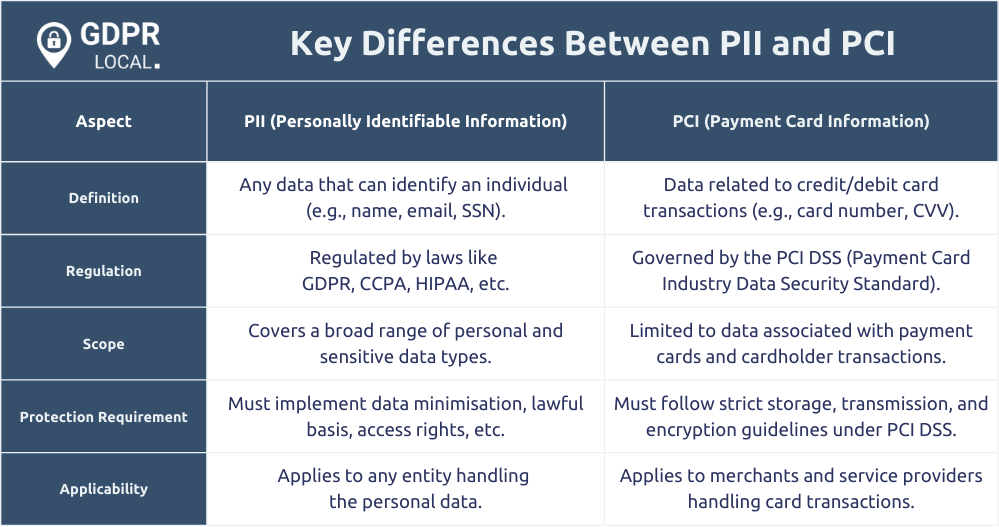
Personally Identifiable Information (PII) is a broad category encompassing any data that can be used to identify an individual, including personal identifying information. This includes full names, Social Security numbers, email addresses, phone numbers, and home addresses. PII is a prime target for identity theft and fraud because it can reveal a person’s identity.
PII is typically categorised into two types: sensitive and non-sensitive. Sensitive PII, such as social security numbers and financial information, can cause significant harm if disclosed. Non-sensitive PII, like zip codes or dates of birth, may seem harmless on their own, but can become sensitive when combined with other personal information.
Distinguishing between sensitive and non-sensitive personally identifiable information matters for implementing effective data protection strategies. For example, an email address alone might not pose a significant risk, but when combined with financial data or IP addresses, it becomes sensitive personal data.
What Is PCI?
Payment Card Industry (PCI) data refers to the data associated with payment cards. It includes all details associated with credit and debit card transactions, including payment card transaction details. This includes cardholder names, card numbers, expiration dates, and security codes. The PCI Data Security Standard (PCI DSS) sets strict guidelines to protect this data and ensure the security of payment card transactions.
PCI data is highly sensitive because it is directly linked to financial transactions. Elements such as Primary Account Numbers (PAN), CVV codes, and PIN codes are essential for processing payments and must be safeguarded to prevent fraud and identity theft.
PCI DSS compliance matters. Adhering to these standards allows businesses to protect cardholder data, reduce fraud risk, and build customer trust.
What Are the Key Differences Between PII and PCI?
While PII and PCI data both need protecting, they differ in several ways. The primary distinction lies in the data: PII pertains to personal identifiers, whereas PCI focuses specifically on payment-related information.
Recognising these differences matters for implementing appropriate security measures and ensuring regulatory compliance.
How Do PII and PCI Data Types Differ?
PII includes a wide range of information, such as names, addresses, and other identifiers that can be used to trace an individual’s identity. This data becomes even more sensitive when combined with other information, making it easier for cybercriminals to commit identity theft and fraud.
PCI data concerns payment card information, including card numbers, expiration dates, and security codes. PCI data is used during payment card transactions to authorise and process payments, making its protection vital to preventing fraud in financial details.
What Regulatory Frameworks Govern PII and PCI?
Various regulatory frameworks govern the protection of personally identifiable information (PII) and payment card data. For PII, regulations such as the General Data Protection Regulation (GDPR) and the Health Insurance Portability and Accountability Act (HIPAA) mandate strict security standards to protect personal data from unauthorised access. Organisations must implement data security safeguards and breach notification systems under these laws.
PCI data is governed by the PCI Data Security Standard (PCI DSS), which outlines detailed security measures to protect cardholder information during payment card transactions. Compliance with the PCI DSS helps prevent fraud and ensure the security of payment card data.
What Compliance Requirements Apply to PII and PCI?
Compliance with data protection regulations helps prevent legal and financial penalties for mishandling PII and PCI data. Organisations must establish clear policies and procedures for handling PII to ensure effective management of sensitive data.
Regular risk evaluations and audits help identify vulnerabilities and ensure compliance with applicable laws and standards. Providing employees with compliance training also helps them understand the regulations and safeguard sensitive data effectively.
Why Does Protecting PII and PCI Matter?
Security breaches involving PII and PCI data can result in significant financial losses, legal repercussions, and severe damage to a business’s reputation. Protecting this information helps organisations prevent identity theft and financial fraud while maintaining customer trust.
How Does Protecting PII Prevent Identity Theft?
Protecting PII reduces the risk of identity theft. Security protocols, such as secure storage, transmission, and processing of PII, help maintain its confidentiality and integrity. Strong security measures keep sensitive personal information protected from unauthorised access.
Effective identity theft prevention needs a multi-layered approach, including data encryption, access controls, and regular audits. These measures help organisations detect and prevent potential breaches, protect personal information, and reduce the risk of identity theft.
How Does Protecting PCI Data Support Financial Security?
Securing PCI data is central to preventing fraudulent transactions and ensuring customers’ financial security. Consumers are particularly concerned about the safety of their card information during transactions, making it essential for businesses to implement strong security measures to protect cardholder data.
Effective PCI data security measures include encryption, access controls, and regular audits to identify and address vulnerabilities. Maintaining high security standards allows organisations to protect cardholder data and prevent financial fraud.
How Does Data Protection Affect Customer Trust and Reputation?
Data breaches can significantly harm customer trust and a business’s reputation. Ensuring strong protection of customer data demonstrates a commitment to security and can positively influence overall business reputation.
Maintaining customer trust requires consistent, honest communication about data protection practices. Implementing and adhering to strict security measures builds and maintains customer trust, which supports overall business reputation while protecting customer data.
What Are Best Practices for Securing PII and PCI Data?
Implementing best practices for data protection matters for safeguarding PII and PCI data in an increasingly digital world. A multi-layered approach that combines sound business processes with strong technology controls can significantly improve data security for the data owner.
Why Does Data Encryption Matter for PII and PCI?
Data encryption matters for data security, keeping sensitive information confidential during storage and transmission. Encrypting data protects it from unauthorised access and breaches, making it an essential practice for safeguarding sensitive information.
Strong encryption practices involve encrypting data both at rest and in transit. This prevents interception and ensures that sensitive information remains secure as it is transmitted between systems.
How Do Access Controls Protect PII and PCI?
Access controls limit who can access sensitive PII and PCI data. Role-based access control ensures that only authorised personnel can interact with this information, meaningfully improving data security.
Restricting unauthorised access helps organisations prevent data breaches and maintain the integrity and confidentiality of sensitive information. Strong access controls are a fundamental aspect of any data protection strategy.
Why Are Regular Audits Important?
Regular audits help identify security weaknesses and ensure ongoing regulatory compliance. Regular risk assessments help businesses detect vulnerabilities and strengthen their defences against potential threats.
Audits should result in a report that outlines findings and provides suggestions for improvement. This helps organisations refine their compliance policies and address any identified flaws. Prioritising regular audits keeps data protection strategies effective.
What Are Real-World Examples of PII and PCI Breaches?
Studying real-world examples of PII and PCI breaches helps organisations understand their vulnerabilities and the consequences of data breaches.
What Is a High-Profile Example of a PII Breach?
In 2024, Hathway’s data breach exposed the sensitive KYC details of 4 million users, raising significant concerns about identity theft. The National Public Data breach exposed 2.9 billion records, affecting 170 million individuals and highlighting the importance of secure access controls.
These breaches significantly increased the risk of identity theft and financial fraud for millions of affected individuals, and show why strict access controls matter for preventing unauthorised data breaches.
What Is a Major Example of a PCI Breach?
In 2024, a significant PCI breach was reported involving a major retailer. Hackers accessed the credit card data of over 100,000 customers through a phishing scheme. Another notable incident involved the Bank of America ransomware attack, which exposed over 57,000 customers’ credit card information, severely impacting customer trust and financial security.
These breaches show the urgent need for security measures to safeguard payment card data and prevent financial fraud. Organisations must prioritise PCI DSS compliance to protect cardholder information during payment card transactions.
How Should You Respond to a Data Breach?
Responding effectively to a data breach matters for minimising its impact. Swift action to identify, contain, and mitigate the issue can significantly reduce financial and reputational damage.
What Should an Incident Response Plan Include?
A well-defined incident response plan matters for effectively managing data breaches. It should outline procedures for reporting incidents, the roles of team members, and steps to establish a timeline of the breach. An effective incident response plan helps organisations minimise damage and recover quickly.
Implementing these elements in an incident response plan enables organisations to respond efficiently and effectively to data breaches, reducing their impact and preventing future incidents through intrusion detection systems.
What Are the Notification Requirements After a Breach?
Organisations are legally obliged to notify affected individuals promptly if a data breach poses a high risk to them. Adhering to specific timelines and formats for these notifications ensures compliance with data privacy laws and helps maintain customer trust.
What Remediation Efforts Follow a Data Breach?
Post-breach remediation efforts matter for reducing the effects of a data breach. Businesses must act swiftly to execute their incident response plan, which should outline specific roles, responsibilities, and procedures for efficiently handling the breach.
Effective security measures, such as data encryption and access controls, help prevent future breaches. Regular audits should be conducted to identify vulnerabilities and ensure compliance with data protection standards.
Conclusion
Understanding the differences between PII and PCI, their respective regulatory frameworks, and compliance requirements is essential for protecting sensitive data. By implementing best practices for data security, organisations can prevent breaches, safeguard customer information, and maintain trust. Strong data protection comes down to a multi-layered approach that combines sound business processes with the right technical controls.
Frequently Asked Questions
What is the primary difference between PII and PCI?
The primary difference between PII and PCI is that PII refers to any data that can be used to identify an individual, directly or indirectly. PCI specifically refers to sensitive payment card details. Understanding this distinction matters for adequate data protection and compliance.
Why is it essential to protect PII and PCI data?
Protecting PII and PCI data helps prevent identity theft and financial fraud, which can result in significant economic losses and damage a business’s reputation. Ensuring the security of this information also maintains customer trust, a vital component for any successful business.
What are some regulatory frameworks governing PII and PCI data?
Regulatory frameworks governing Personally Identifiable Information (PII) include the General Data Protection Regulation (GDPR), the Health Insurance Portability and Accountability Act (HIPAA), and the California Consumer Privacy Act (CCPA). The governing standard for Payment Card Industry (PCI) data is the PCI Data Security Standard (PCI DSS).
What are the best practices for securing PII and PCI data?
To secure PII and PCI data, it is essential to implement data encryption, access controls, regular audits, intrusion detection systems, and a defined incident response plan. Adhering to these practices meaningfully improves data protection and reduces risk.
How should an organisation respond to a data breach?
An organisation must act swiftly to identify and contain the data breach by promptly implementing an incident response plan, notifying affected individuals, and strengthening security measures. These actions help reduce damage and protect sensitive information.
Disclaimer: This blog post is intended solely for informational purposes. It does not offer legal advice or opinions. This article is not a guide for resolving legal issues or managing litigation on your own. It should not be considered a replacement for professional legal counsel and does not provide legal advice for any specific situation or employer.

About the Author
Head of Commercial & Country Manager
Zlatko Delev is Head of Commercial and Country Manager at GDPRLocal, where he leads the company’s commercial strategy and market presence. He brings international experience across sales, marketing, and customer success, along with a legal background from his studies at Iustinianus Primus Law School in Skopje, Macedonia.
Zlatko sits at the front line of GDPRLocal’s client relationships, guiding organisations through the first stages of their compliance journey and helping them understand where they stand and where they need to go on GDPR, information security, and the emerging landscape of AI regulation. His role bridges commercial strategy with practical data protection knowledge, ensuring clients get clear, actionable direction from their very first conversation with GDPRLocal.
Alongside his commercial focus, Zlatko has trained extensively in project management and organisational leadership, including risk management, stakeholder communication, agile methodology, and digital marketing, a broad skill set that supports his structured, delivery-focused approach to growing GDPRLocal’s business internationally.