Creating a GDPR Compliant Website: What Steps to Follow
Updated: August 2026
GDPR protects the personal data and privacy of people in the EU. It applies to any organisation, anywhere, that handles the personal data of EU residents, regardless of where that organisation is based.
Non-compliance carries real financial risk: penalties can reach 4% of annual global revenue or €20 million, whichever is higher. Building a GDPR-compliant website means working through your data handling practices from the ground up, from assessing what you currently collect to putting a genuine consent mechanism in place for cookies.
Key Takeaways
• A GDPR-compliant website needs a clear lawful basis for processing data, granular consent for non-essential cookies, and a privacy policy that plainly states what data you collect and why.
• Consent for cookies must be freely given, specific, and easy to withdraw. Under GDPR, a pre-ticked box or a cookie wall that blocks access until someone accepts everything doesn’t count as valid consent.
• GDPR compliance isn’t a one-off project. Regular data audits, privacy policy reviews, and checks on third-party tools and processors keep a website compliant as data practices and the law both change.
What Is GDPR and How Does It Affect Your Website?
Understanding GDPR’s impact on a website means working through privacy, consent, and data management together.
What Does Consent Management Involve?
Websites need to give users control over cookies and trackers that collect personal data.
Explicit consent is required before non-essential cookies activate, with a mechanism for users to give granular consent by choosing which cookie categories to allow rather than an all-or-nothing toggle.
Consent must be freely given and as easy to withdraw as it was to give, with a refresh at least annually. A design that blocks access until someone accepts everything doesn’t count as freely given consent.
What Are the Key GDPR Requirements?
A lawful basis for processing, genuine consent, and respect for data subject rights.
Data protection impact assessments for higher-risk processing, and data breach notification when something goes wrong.
Privacy by design, a Data Protection Officer where one is required, and safeguards for international data transfers.
What Rights Do GDPR Grant, and What Does Compliance Involve?
GDPR grants data subjects the right to access, correct, erase, and restrict the processing of their data.
Organisations generally need to report data breaches within 72 hours of becoming aware of them.
Data transferred outside the EU needs an appropriate safeguard, such as standard contractual clauses.
Meeting these principles avoids fines of up to €20 million or 4% of annual turnover, and it builds trust with users.
How Do You Assess Your Website for GDPR Compliance?
Assessing a website for GDPR compliance means understanding your data handling practices in detail and committing to protecting user privacy.
How Do You Conduct a Data Inventory?
Identify all the personal data you collect, including sensitive data, so you understand its scope and where it lives.
Classify that data appropriately and confirm you have valid consent, or another lawful basis, for collecting and storing it.
What Security Measures Should You Implement?
Run regular penetration testing and vulnerability assessments to detect potential weaknesses before they become breaches.
Install an SSL certificate, use strong passwords, and apply DDoS protection.
Encrypt data, especially during transfers and in storage.
What Should You Check in Your Privacy Policy and Consent Setup?
Update your privacy policy to clearly explain how you collect, use, and manage user data.
Use a consent management platform that gives users granular control over which cookie categories they allow.
Audit your cookie policy regularly, and confirm you have explicit consent for analytics and form data collection.
What Changes Do You Need to Implement for Compliance?
Implementing GDPR compliance takes a mix of technical solutions and policy adjustments.
What Technical Changes Are Needed?
Consent management platforms: use a tool that scans your site for cookies, presents a clear banner, and lets users choose which categories to allow rather than accepting everything by default.
Built-in privacy tools: most modern content management systems now include built-in privacy settings, such as data export and erasure features and a policy generator. Check what your CMS already supports, including how it handles analytics, tracking, and remarketing data, before adding a separate plug-in.
What Policy and Procedure Changes Are Needed?
Privacy policy revisions: make sure your privacy policy is prominently displayed, written in clear language, and includes data collection methods, how you use data, user rights, and contact information. Avoid confusing language or missing details.
Data policies: establish clear processes for handling access, deletion, and correction requests. Build in privacy by design and by default, so you consider data protection from the outset rather than adding it afterwards.
What Should You Review Regularly?
Data protection measures: review and strengthen your data protection measures on a set schedule, including staff training on phishing and data handling. Check any third-party apps, plug-ins, or processors you use to confirm they’re GDPR compliant too.
How Do You Set Up a Privacy Policy?
A clear Privacy Policy builds trust between a website and its users by explicitly stating how it handles personal data.
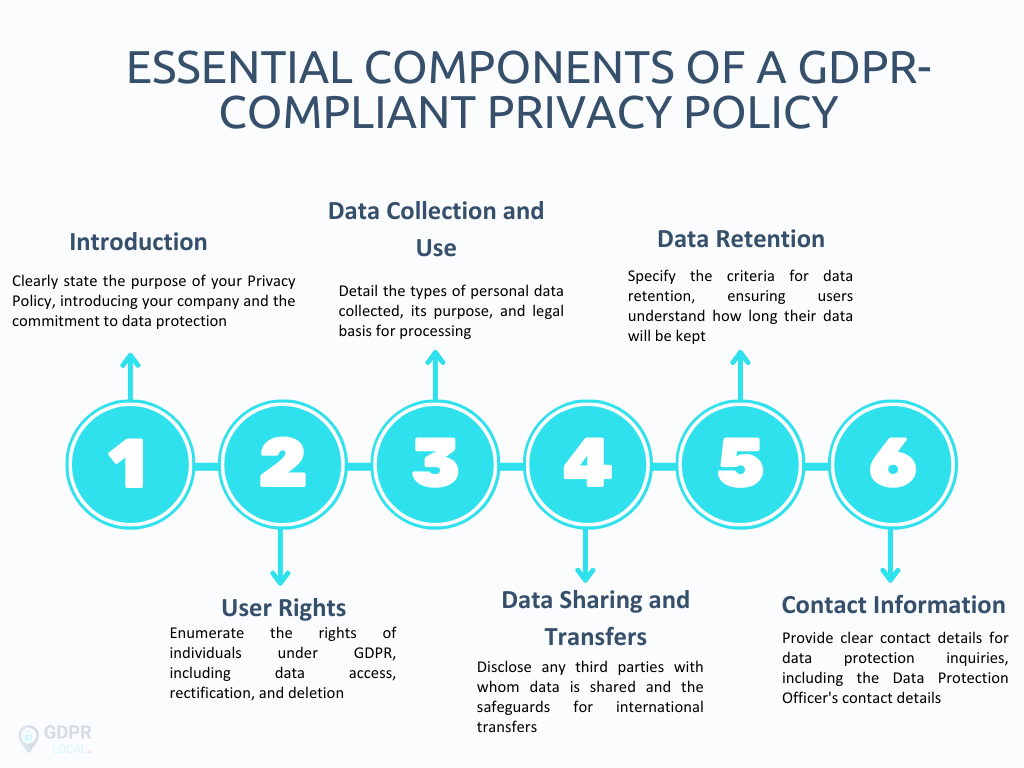
What Are the Steps to Implementing Your Privacy Policy?
1. Review and update regularly: make sure your policy reflects current practices, legal requirements, and user expectations.
2. Keep it accessible: link to it from every page of your website, and be ready to provide it orally if someone asks.
3. Use clear language: explain your data practices simply, avoiding legal jargon so users can actually understand it.
How Do You Manage Cookies and User Consent?
Managing cookies and user consent well means being upfront about what data you collect and getting real, informed consent.
What Should a Cookie Banner Include?
Deploy a cookie banner that describes the types of cookies used and their purposes.
Provide clear opt-in and opt-out choices so users can freely accept or reject cookies.
How Should You Document and Manage Consent?
Record and securely store all user consents; this is what demonstrates compliance if a regulator asks.
Prioritise obtaining explicit opt-in consent before collecting any data.
How Do You Handle Marketing Opt-Outs?
Regularly verify that opt-out mechanisms for marketing communications work correctly, and keep the lawful grounds for contacting individuals clear.
How Do You Maintain Continuous Compliance?
Continuous compliance and data management under GDPR takes a structured, ongoing approach rather than a one-off project.
How Often Should You Run Data Audits and Risk Assessments?
Run periodic data audits to identify and address risks in data processing and storage.
Build GDPR compliance checks into every stage of the data lifecycle, so governance policies stay clear and consistently enforced.
How Do You Adapt to Global Data Protection Laws?
GDPR-style legislation has spread well beyond the EU, including California’s CPRA, Brazil’s LGPD, and Japan’s APPI. Map your compliance obligations against each relevant law rather than assuming GDPR compliance covers everything.
What Operational and Technical Measures Should You Take?
Assign a Data Protection Officer, or another named owner, to oversee GDPR compliance and handle data access requests, including requests to receive personal data in a portable format.
Keep your CMS updated, use HTTPS throughout, put together a data breach response plan, and automate compliance processes where it makes sense to.
Conclusion
These practices support legal compliance, but they also reinforce trust and the safety of user data, which matters more as privacy expectations keep rising. Building a GDPR-compliant website is an ongoing process that must keep pace with changes in the law and user expectations.
A GDPR-compliant website helps avoid fines and strengthens reputation and customer relationships. Implementing the steps above and reviewing them regularly keeps an organisation on the right side of the law while building stronger, trust-based relationships with its users.
For further guidance, get in touch.
Frequently Asked Questions
What steps should I take to make my website GDPR compliant?
Map the personal data you hold, strengthen your website’s security, update your privacy policy to GDPR standards, get explicit consent before sending marketing emails, add a cookie consent banner, make sure your web forms are compliant, check any third-party services or processors you use, and review how you handle international data transfers.
What are the key GDPR principles I need to follow?
Lawfulness, fairness, and transparency in how you handle personal data; limiting processing to specified, explicit purposes; collecting only the data you need; keeping data accurate; storing data only as long as necessary; keeping data secure and confidential through proper processing; and being able to demonstrate accountability for your processing activities.
What does GDPR compliance involve day to day?
Email security measures, strong password policies, two-factor authentication, encrypting devices that handle personal data, using a VPN where appropriate, and specialised training for employees with access to personal data, plus general GDPR awareness training for everyone else.
What’s the general process for becoming GDPR compliant?
Build a solid understanding of GDPR and raise awareness within your organisation, assess the impact of your current data handling practices, understand and comply with special requirements for processing children’s data, update your data security policies and procedures, build in data protection by design and by default, and work out exactly how GDPR affects your organisation so you can make the right adjustments.
Disclaimer: This blog post is intended solely for informational purposes. It does not offer legal advice or opinions. This article is not a guide for resolving legal issues or managing litigation on your own. It is not a replacement for professional legal counsel and does not provide legal advice for any specific situation or employer.

About the Author
Sales & Business Development Consultant
Ana Mishova is a Sales & Business Development Consultant at GDPRLocal, the UK’s fastest-growing B2B compliance partner. With four years at the company, she has experience across operations, from creating processes and shaping compliance services to driving growth through sales, marketing, and strategic partnerships.
Her prior experience includes working closely with current and prospective clients and coordinating with stakeholders to design and plan compliance products. She has led internal change initiatives, driven sales, and guided organisations in selecting the most appropriate compliance strategies.
She holds a degree in psychology, which enhances her ability to connect with people and understand their needs. At GDPRLocal, she works with colleagues to strengthen the sales function and plays an active role in developing the sales strategy.