Opt Out Meaning: Definition, Rights and Examples
To opt out means to choose not to participate in something you were previously involved in. This article explains what “opt out” means and how it’s used, from stopping marketing emails to protecting your privacy. The term also pairs with other phrases, and dictionaries clearly define these.
Key Takeaways
• Opting out lets people withdraw from activities or services, giving them more control over their privacy and fewer unwanted messages.
• The difference between “opt-out” and “opt-in” matters: opting out means stopping communications after you already agreed to them, while opting in requires explicit consent before you receive anything.
• Legal rules shape the opt-out process across different areas, requiring companies to give users a clear way to withdraw consent and follow privacy laws.
Opt-out Meaning
To opt out means choosing not to take part in, or withdrawing from, a specific activity or service. It lets people control which communications and services they receive, so they get only what they want.
Whether it’s unsubscribing from a mailing list or declining data collection, opting out is about making a clear choice to step back. It often protects privacy and reduces unwanted contact.
Difference between opt-out and opt-in
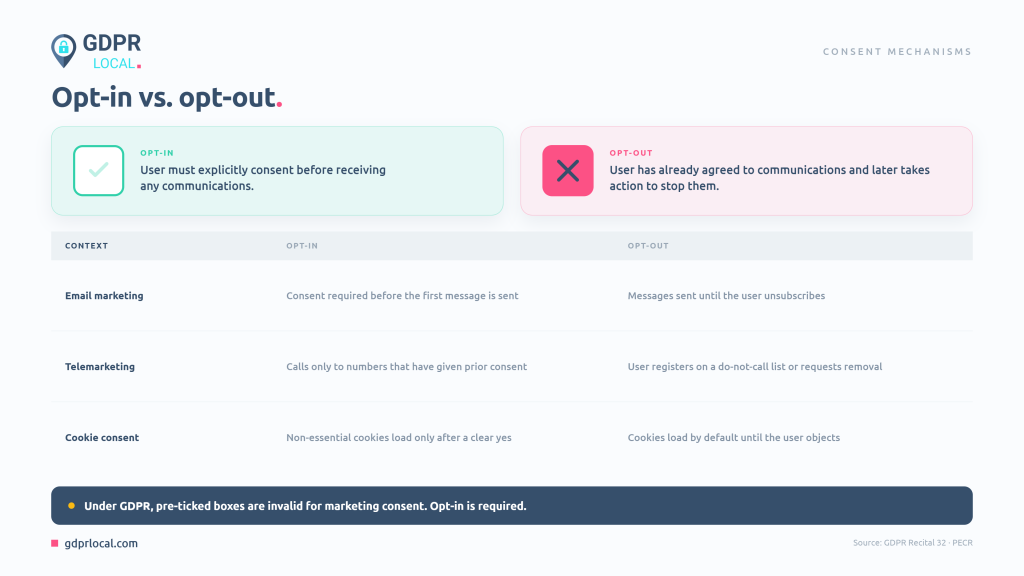
“Opt-out” and “opt-in” both come up in privacy and consent discussions, but they work in opposite directions. Opting in requires your explicit consent before any communication starts. You actively agree to receive information or marketing messages first.
Opting out lets you stop unsolicited marketing messages after you already agreed to receive them. This suits people who initially consented but later changed their minds. It safeguards against ongoing unwanted contact.
The best option depends on your preferences and the situation. Some people like the control of opting in from the start. Others prefer the flexibility of opting out, since it lets them withdraw consent later if their preferences change.
Where do people commonly opt out?
People most often opt out in marketing communications. Whether it’s emails, telemarketing calls, or online adverts, opting out gives consumers control over unwanted contact and helps protect their privacy.
Below, we look at three common contexts: email marketing, telemarketing registries, and online advertising. Each has its own rules and mechanisms for withdrawing consent.
If you need additional help, reach out here -> https://gdprlocal.com/services/compliance-hub/
Email marketing opt-out
Companies need explicit consent before sending marketing emails. This usually comes through an opt-in process, but companies must also give a clear way to unsubscribe if someone no longer wants these emails.
Best practice means honouring opt-out requests quickly and keeping a visible unsubscribe link in every email. This builds trust and keeps companies compliant with the law.
Failing to provide a clear opt-out can frustrate consumers and lead to legal trouble. Companies should confirm to users once their request has gone through, so people feel in control of their inbox.
Telemarketing opt-out
Telemarketing calls are another area where opting out matters. National registries, such as the National Do Not Call Registry, allow people to block unwanted telemarketing calls by registering their phone numbers for free.
Once you register a number, it typically takes about 31 days for telemarketers to stop calling it. This gives consumers real control over their phone communications and reduces unwanted calls.
Online advertising and cookies opt-out
Online advertising and tracking cookies are everywhere. Opt-out cookies let users stop ad tracking by advertising networks and platforms, limiting targeted ads based on their browsing behaviour.
Opt-out cookies let people manage their privacy preferences and stop advertisers from collecting data on their browsing habits. This helps you stay in control of your data online.
Legal rules for opting out
Different jurisdictions have specific laws on how people can opt out of various services. These laws protect consumers and give companies clear guidelines.
The CAN-SPAM Act requires clear opt-out options in marketing emails. Failing to give a proper opt-out option can lead to legal trouble. Rules vary by region, with some areas setting stricter requirements than others.
When a company receives an opt-out request, it should add the person to a suppression list to stop future marketing outreach. Companies must also confirm that the request has been processed, ideally by providing the customer with feedback.

Opting out in specific systems
Opting out isn’t limited to marketing. It also covers specific systems that allow people to protect their privacy and control what data they share.
Below, we examine two systems in which opting out matters: Wi-Fi positioning systems and unsolicited direct mail.
How do you opt out of Wi-Fi positioning systems?
Wi-Fi positioning systems collect location data based on signal strength and the distance to Wi-Fi access points. This raises privacy concerns. Google offers an opt-out option through its ‘nomap’ naming convention.
By adding “_nomap” to the end of a Wi-Fi access point’s network name (SSID), you can stop it from being included in Wi-Fi positioning databases. This is a useful step for anyone who wants to limit location data collection.
How do you opt out of unsolicited direct mail?
Unsolicited direct mail, often called junk mail, frustrates many people. In the US, the DMAchoice service, run by the Data & Marketing Association (now part of the Association of National Advertisers), lets consumers opt out of unsolicited marketing mail.
Registering is free and reduces the amount of personally addressed advertising mail sent to your home, making it easier to manage your post and reduce clutter.
Employment and education opting out
Opting out also applies to employment and education. In these areas, people may need to consent to certain activities or policies, but they usually have the right to withdraw that consent too.
Below, we look at two examples: employee arbitration clauses and school participation.
Can employees opt out of arbitration clauses?
Arbitration clauses in employment contracts require disputes to be resolved through arbitration rather than in court. This can speed up resolution, but employees often can opt out. This usually means providing written notice within a set timeframe after receiving the agreement.
By opting out, employees retain the right to take legal action in court if a dispute arises. This can give them greater security and a stronger sense of fairness in their employment relationship.
Can parents and students opt out of school programmes?
In education, parents and students can choose to opt out of specific school programmes or activities. This can include health screenings, certain curricula, and other activities they may not want to take part in.
By exercising this right, parents and students ensure the school respects their preferences and values.
General process for opting out
The opt-out process varies by service, but it usually involves notifying the relevant company that you’re withdrawing consent. Companies often must provide clear opt-out mechanisms as part of their regulatory obligations.
Start by identifying the services you want to withdraw consent from, then follow the instructions provided. This might mean finding an opt-out option on a website or sending a notice through another channel.
Once a company receives your opt-out request, it must confirm it processed it and, ideally, provide feedback. This verification step makes sure your preferences are respected and legally recorded.
Notification requirements for opting out
Notifying a company of your decision to opt out is a key step in getting your preferences respected. Companies must keep a record of all customer opt-out requests to stay compliant with regulations. This record-keeping ensures opt-out requests are processed correctly, so users don’t receive unwanted communications later on.
Opt-out requests
Verifying opt-out requests makes sure people’s preferences are respected and legally recorded. Companies usually must confirm and document how they process opt-out requests to comply with legal rules.
Good practice includes keeping accurate records and sending timely confirmations to users about the status of their request. This builds consumer trust and helps companies stay compliant.
Summary
Understanding what opting out means and how it applies in different areas helps you stay in control of your personal information. From email marketing and telemarketing to online advertising and employment contracts, opting out lets you make informed decisions about your privacy.
Knowing the legal rules and best practices around opting out helps consumers manage their digital and physical environments with more confidence. Exercising your right to opt out means your preferences are respected, and unwanted communications are reduced.
Read our related guides on cookie consent requirements under GDPR and email marketing compliance for more on managing consent.
Frequently Asked Questions
What is the word for opt-out?
A suitable alternative to “opt-out” is “withdraw.” It describes formally leaving or withdrawing from a situation.
How can I opt out of email marketing?
Find the unsubscribe link in the emails you receive and follow the instructions to remove yourself from the mailing list. This stops you from receiving those communications.
What is the Do Not Call Registry?
The Do Not Call Registry is a national service that lets people register their phone numbers so telemarketers can’t call them unsolicited. It significantly reduces unwanted telemarketing calls.
How can I stop online advertisers from tracking me?
Use opt-out cookies to manage your privacy preferences and limit targeted advertising. This reduces ad targeting based on your online behaviour.

About the Author
Zlatko Delev
Country Manager & Head of Commercial — GDPRLocal
Zlatko specialises in data protection compliance, ISMS strategy, and AI law. With a legal background and hands-on experience supporting organisations globally, he helps businesses navigate GDPR, the EU AI Act, and international privacy frameworks.

About the Author
Head of Commercial & Country Manager
Zlatko Delev is Head of Commercial and Country Manager at GDPRLocal, where he leads the company’s commercial strategy and market presence. He brings international experience across sales, marketing, and customer success, along with a legal background from his studies at Iustinianus Primus Law School in Skopje, Macedonia.
Zlatko sits at the front line of GDPRLocal’s client relationships, guiding organisations through the first stages of their compliance journey and helping them understand where they stand and where they need to go on GDPR, information security, and the emerging landscape of AI regulation. His role bridges commercial strategy with practical data protection knowledge, ensuring clients get clear, actionable direction from their very first conversation with GDPRLocal.
Alongside his commercial focus, Zlatko has trained extensively in project management and organisational leadership, including risk management, stakeholder communication, agile methodology, and digital marketing, a broad skill set that supports his structured, delivery-focused approach to growing GDPRLocal’s business internationally.