Who is Responsible for Keeping Personal Data Safe?
Who is ultimately responsible for keeping personal data safe? The answer lies in three key roles: the Data Protection Officer (DPO), Data Controller, and Data Processor. Each role is distinct in ensuring compliance with data protection laws, such as the General Data Protection Regulation (GDPR), and in protecting the rights of individuals whose data is being processed.
Understanding the differences between these roles is essential for organisations that process personal data. The DPO is a specific position within a company responsible for overseeing compliance. Data Controllers and Processors are defined by their function: whether they determine the purposes of data processing or carry it out on behalf of another party.
Key roles in data protection
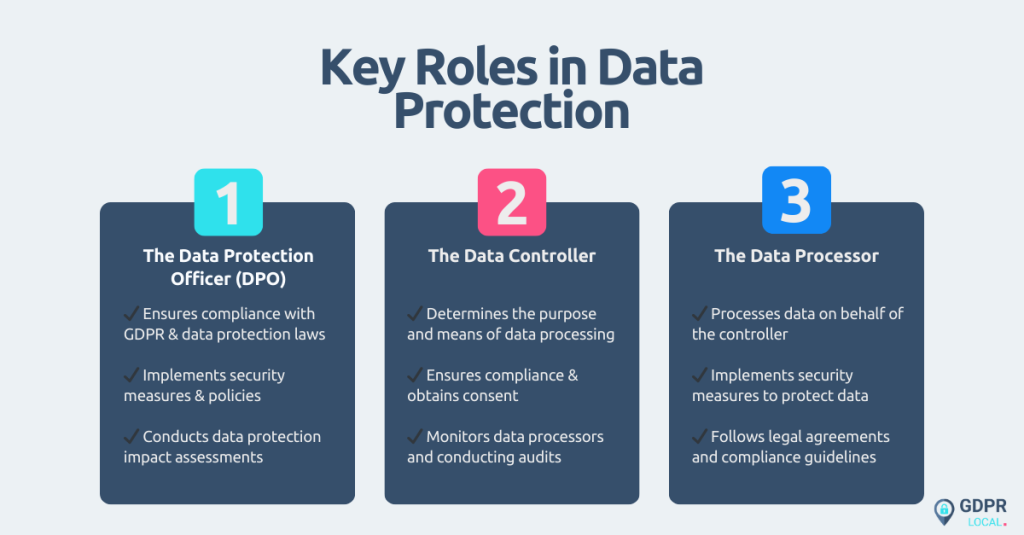
Adequate data protection depends on a clear distinction between the roles of Data Protection Officers (DPOs), Data Controllers, and Data Processors. The DPO is an appointed individual within an organisation, while Data Controller and Data Processor describe what an entity (organisation or individual) does with personal data.
The role of a Data Protection Officer
The Data Protection Officer (DPO) is a key compliance figure who acts as an independent advisor and compliance officer within an organisation, separate from the data processing decisions made by Controllers or Processors.
Under GDPR, appointing a DPO is mandatory for organisations that:
• Process large-scale sensitive personal data, such as health records or biometric data.
• Engage in systematic monitoring of individuals, including online tracking.
• Are public authorities or organisations that regularly process personal data.
The DPO ensures an organisation complies with data protection laws. Their responsibilities include:
• Overseeing the implementation of data protection policies.
• Conducting Data Protection Impact Assessments (DPIAs) to identify potential risks.
• Acting as the primary point of contact for data protection authorities.
• Ensuring that employees are trained and aware of data protection obligations.
Although the DPO is a designated position, it must operate independently and cannot be instructed to act in a way that undermines GDPR compliance. The DPO acts as an internal watchdog, ensuring that an organisation’s data processing activities comply with legal requirements.
The role of a Data Processor
A Data Processor is any organisation or individual that processes personal data on behalf of a Data Controller. A Processor handles personal data in accordance with the Controller’s instructions and has no say in the purpose or method of processing.
For example, suppose a company hires an email marketing agency to send promotional emails to customers. In that case, the agency acts as a Data Processor because it processes customer data at the Data Controller’s instruction.
Responsibilities of a Data Processor include:
• Following the Data Controller’s instructions and not using the data for any other purpose.
• Implementing security measures to protect personal data from breaches.
• Assisting the Data Controller in GDPR compliance, such as conducting audits.
Like Data Controllers, Data Processors can be both organisations and individuals. For instance, an independent IT consultant who manages a company’s customer databases would be classified as a Data Processor.
Organisational measures for Data Protection
An internal policy outlining data protection rules ensures all staff understand them consistently. Organisational measures prepare for data breaches, maintain operations, and build a culture of data privacy. These measures include conducting information risk assessments, establishing security policies and procedures, and implementing employee training and awareness programmes.
These measures match privacy objectives with broader business goals, improving overall data management.
Information risk assessments
Identifying potential threats to personal data is central to practical risk assessments. During these assessments, organisations must evaluate the severity and likelihood of identified risks. Assessing the risk, value, and sensitivity of personal data helps determine potential damage and appropriate security measures.
These risk assessments help organisations prioritise their resources and implement measures that mitigate the most significant risks. Regular assessments keep the organisation prepared for new and evolving data security threats.
Security policies and procedures
Security guidelines clarify employees’ responsibilities regarding data protection. Document security policies and make them readily accessible to all employees involved in data handling. Senior management must actively demonstrate their commitment to data privacy by prioritising it in organisational goals and policies.
Data protection policies should be updated regularly and adapted as technology and regulations change. This keeps the organisation compliant with data protection legislation and maintains sound data security.
Employee training
Ongoing training programmes ensure employees understand their roles in maintaining data privacy. Staff should receive both initial and refresher data protection training. Employees must understand their data protection obligations to safeguard personal data and implement security policies effectively.
A key factor in practical staff training is ensuring trainers are reliable and knowledgeable. Comprehensive training programmes build a culture of security awareness, ensuring all employees handle personal data responsibly.
Technical measures to protect personal data
Technical measures protect personal data from breaches. Under the GDPR, organisations must adopt appropriate technical and organisational measures to secure personal data. These measures include implementing access controls, encryption, pseudonymisation, and regular security testing.
Combining technical measures with organisational policies creates a sound data protection framework addressing physical and IT security.
Access controls
Role-based access control limits access based on specific organisational roles and responsibilities. Access controls are essential for protecting personal data, ensuring that only authorised individuals can access sensitive information. Restricting access according to predefined roles reduces the risk of unauthorised access and data breaches.
Strong access controls protect personal data and support compliance with data protection regulations. These controls ensure that only those who need it for their work can access the data, improving data security.
Encryption and pseudonymisation
Encryption is a widely recommended practice for safeguarding personal data, especially during transmission. Encryption converts data into a coded format, making it unreadable to unauthorised users. This protects data from unauthorised access and breaches during transmission or storage.
Pseudonymisation improves data security by replacing identifiable information with pseudonyms. This adds an extra layer of protection, ensuring that even if data is accessed unlawfully, it cannot be easily linked to specific individuals. Encryption and pseudonymisation are vital for complying with data protection regulations.
Security testing
Organisations must regularly assess the effectiveness of their security measures using various testing methods. Vulnerability scanning and penetration testing are key methods to evaluate security. These tests help identify potential weaknesses and vulnerabilities that attackers could exploit.
The frequency of security testing varies depending on the organisation and the personal data it processes. Regular security testing keeps the organisation’s defences strong and able to protect personal data from evolving threats.
Legal and regulatory compliance
The General Data Protection Regulation (GDPR) protects the privacy of EU residents’ data, making compliance essential for organisations that handle it. Maintaining GDPR compliance requires adopting data protection best practices and implementing privacy measures. Failure to comply with GDPR requirements can result in significant fines and reputational damage.
The GDPR’s influence is global, with many countries adopting similar data protection legislation. Understanding GDPR requirements, conducting Data Protection Impact Assessments (DPIAs), and demonstrating compliance help organisations meet regulatory standards.
GDPR requirements for data security
Secure processing of personal data prevents unauthorised access and accidental loss. Organisations must monitor GDPR compliance daily. This includes implementing appropriate security measures, maintaining accurate records of data processing activities, and respecting data subjects’ rights. Each organisation must process personal data in accordance with established guidelines to avoid unauthorised or unlawful processing.
GDPR compliance requires understanding its requirements and committing to ongoing monitoring and improvement. Adhering to GDPR protects personal data and maintains trust among customers and stakeholders.
When are Data Protection Impact Assessments required?
Data Protection Impact Assessments (DPIAs) help organisations identify and minimise data protection risks. DPIAs are mandatory for processing likely to pose high risks to individuals’ rights and freedoms. The Data Protection Officer (DPO) provides guidance on conducting DPIAs and ensures compliance with data protection regulations.
DPIAs provide evidence of risk management and demonstrate compliance with GDPR requirements. Conducting DPIAs allows organisations to address potential data protection issues and reduce risks before processing begins.
How can organisations demonstrate data protection compliance?
Approved codes of conduct or certification schemes help organisations demonstrate compliance with data protection laws. They provide a structured approach to compliance, ensuring organisations meet regulatory requirements and high data protection standards.
Organisations can demonstrate compliance with data protection laws through various methods that help them meet regulatory requirements. Adhering to these standards builds trust with customers and stakeholders and demonstrates a commitment to protecting personal data.
Data breaches under GDPR
Effective data breach management minimises harm and meets GDPR legal requirements. Organisations need clear protocols to detect, investigate, and report data breaches to minimise legal repercussions and safeguard individuals. A strong data privacy culture within an organisation protects personal information and reduces the risk of data breaches.
Data breach management includes identifying breaches, reporting them promptly, and mitigating their impact.
Identifying a data breach
Data breaches fall into several categories, including intentional, unintentional, and technical failures. Intentional breaches include hacking, phishing, and insider threats, while unintentional breaches result from human errors or negligence. Indicators of a data breach include unusual network activity, unauthorised data access, or employee reports of lost data.
Organisations should build a culture of vigilance and encourage employees to report suspicious activity that indicates a data breach. Categorising data breaches helps assess their impact and determine appropriate response actions.
Reporting obligations after a data breach
Under GDPR, organisations must report data breaches to the Information Commissioner’s Office (ICO) within 72 hours. Under the GDPR, you must report breaches that pose a significant risk to individuals’ rights within this timeframe. This reporting obligation ensures that the authorities are aware of the breach and can take appropriate action to mitigate its impact.
Organisations must notify affected individuals if a breach is likely to pose a high risk to their rights and freedoms. This transparency helps individuals take necessary precautions to protect themselves and builds trust in the organisation’s commitment to data protection.
Mitigating the impact of a data breach
Effective communication strategies inform the public and manage perceptions following a data breach. Organisations should communicate transparently with affected individuals and outline protective steps to mitigate the effects of a data breach. Transparent communication mitigates immediate impacts and supports the organisation’s reputation over time.
Strengthening security protocols and supporting affected individuals are key steps to mitigate a data breach’s impact. By taking these actions promptly and efficiently, organisations can demonstrate their commitment to protecting personal data and minimising harm.
A culture of data privacy
Executive leadership that prioritises privacy considerations builds a top-down data privacy culture. Encouraging a data privacy culture means integrating privacy considerations into daily operations and decision-making. Regular updates on data protection procedures build employee awareness of their roles in safeguarding data.
Building a data privacy culture matches privacy objectives with business goals and improves data management.
Leadership commitment
Senior management’s commitment to data privacy can significantly influence the organisation’s overall approach to privacy practices. When leadership prioritises data privacy, it influences the entire organisation, promoting accountability and responsible data handling. Leadership endorsement of data privacy initiatives sets a precedent and builds shared values throughout the organisation.
Senior management actions are vital in cultivating a data privacy culture throughout the organisation. Leadership commitment makes data protection a fundamental part of the organisation’s ethos.
Continuous improvement
Regularly assessing and improving data protection practices allows organisations to adapt to evolving technological and regulatory landscapes. Ongoing improvement enables organisations to adapt to new technologies and regulatory requirements.
Continuously improving data protection measures ensures compliance with legislation and maintains high data security standards. Staying ahead of threats protects stakeholder trust over the long term.
Summary
Data protection is a multifaceted responsibility shared among different organisational stakeholders. Key roles such as the Data Protection Officer, Data Controller, and Data Processor are central to ensuring compliance with data protection regulations. Organisational and technical measures, along with legal and regulatory compliance, are essential to safeguarding personal data. Effective breach management and a strong data privacy culture strengthen an organisation’s data protection framework. By prioritising data protection, organisations can protect personal data, maintain compliance, and build trust with their stakeholders.
Frequently Asked Questions
Who is ultimately responsible for protecting personal data?
As the Data Protection Policy outlines, everyone in an organisation is responsible for protecting personal data. This collective accountability ensures that everyone who handles personal data contributes to its safety and compliance.
Who is responsible for keeping customer data safe?
Everyone involved in processing personal data is responsible for keeping customer data safe. To uphold this trust, implement strong security measures.
Who is responsible for data protection in an organisation?
Data protection responsibility in an organisation is shared among the Data Protection Officer, Data Controller, and Data Processor. Each role plays a critical part in ensuring compliance and safeguarding personal data.
What are the key roles in data protection?
The key roles in data protection are the Data Protection Officer (DPO), Data Controller, and Data Processor, each tasked with specific responsibilities to ensure compliance and protect data. Understanding these roles is vital for effective data governance.
What organisational measures can protect data?
Organisations should conduct information risk assessments, establish strong security policies, and implement comprehensive employee training programmes to protect data effectively. Together, these measures improve data security and raise awareness across the organisation.

About the Author
Zlatko Delev
Country Manager & Head of Commercial — GDPRLocal
Zlatko specialises in data protection compliance, ISMS strategy, and AI law. With a legal background and hands-on experience supporting organisations globally, he helps businesses navigate GDPR, the EU AI Act, and international privacy frameworks.

About the Author
Head of Commercial & Country Manager
Zlatko Delev is Head of Commercial and Country Manager at GDPRLocal, where he leads the company’s commercial strategy and market presence. He brings international experience across sales, marketing, and customer success, along with a legal background from his studies at Iustinianus Primus Law School in Skopje, Macedonia.
Zlatko sits at the front line of GDPRLocal’s client relationships, guiding organisations through the first stages of their compliance journey and helping them understand where they stand and where they need to go on GDPR, information security, and the emerging landscape of AI regulation. His role bridges commercial strategy with practical data protection knowledge, ensuring clients get clear, actionable direction from their very first conversation with GDPRLocal.
Alongside his commercial focus, Zlatko has trained extensively in project management and organisational leadership, including risk management, stakeholder communication, agile methodology, and digital marketing, a broad skill set that supports his structured, delivery-focused approach to growing GDPRLocal’s business internationally.