Datenschutzbeauftragter (DSB): Rolle, Verantwortung und bewährte Praktiken
Updated: July 2026
Data protection matters more than ever for modern businesses, particularly as the volume of personal data processed keeps growing. To comply with data protection regulations, organisations must appoint a Data Protection Officer. The Data Protection Officer oversees and implements data protection measures within an organisation.
This guide covers the roles, responsibilities, and best practices for Data Protection Officers (DPOs): what a DPO is, their responsibilities and requirements, the qualifications needed for the role, and best practices for hiring one. You’ll also find practical recommendations to help your organisation manage data protection well.
Key Takeaways:
• Critical compliance role: A Data Protection Officer (DPO) makes sure an organisation complies with data protection laws, oversees regular audits, advises on privacy measures, and coordinates responses to data breaches.
• Essential qualifications and independence: Effective DPOs have deep expertise in data protection, keep professional independence by reporting directly to senior management, and take part in ongoing training to stay up to date with regulations.
• Organisation-wide impact: The DPO works across departments, such as IT, HR, and legal, to build data protection into all business processes, promote privacy by design, and manage vendor compliance effectively.
What is a Data Protection Officer?
A Data Protection Officer (DPO) is an individual appointed by an organisation to make sure it complies with data protection laws and regulations. The role of the DPO is defined in Articles 37, 38, and 39 of the GDPR. This role acts as a point of contact between the organisation, data subjects, and regulatory authorities.

What are the DPO’s responsibilities and requirements?
The responsibilities include:
• Educating the organisation and its employees on data protection compliance requirements
• Training staff involved in data processing activities
• Conducting regular audits to ensure compliance and address potential issues
• Acting as the point of contact for regulatory authorities
• Providing advice and monitoring the impact of data protection efforts
• Keeping records of data processing activities
• Interacting with data subjects to inform them about the use of their data and their rights
To qualify for the role of a DPO, an individual should have expert knowledge of data protection law and practices. The GDPR does not specify exact qualifications, but the expertise should match the complexity and scale of the organisation’s data processing activities. A good understanding of the organisation’s industry and its specific data protection needs also matters.
What are the best practices for hiring a DPO?
Appointing the right DPO matters for adequate data protection within an organisation. Here are some best practices to consider:
Why does the DPO role matter?
The DPO’s role is essential to achieving and maintaining compliance with data protection regulations. The DPO is a trusted advisor who helps implement data protection measures, educate employees, and ensure accountability within the organisation.
How do you choose the right DPO?
When selecting a DPO, consider their expertise and experience in data protection. Look for candidates with a deep understanding of data protection laws, regulations, and industry best practices. Finding someone familiar with the organisation’s specific data processing activities also helps, since they can give tailored guidance.
Should you appoint an internal or external DPO?
Organisations can appoint an internal or external DPO. An internal DPO is an existing employee who takes on the extra responsibilities of the role. An external DPO can be a consultant or service provider contracted to carry out the DPO’s duties. Both options have their advantages and considerations, and the right choice depends on the organisation’s specific needs and resources. GDPRLocal’s Data Protection Officer service provides outsourced DPO support to organisations of all sizes, covering the full scope of responsibilities described in this guide.
How should the DPO collaborate with other departments?
The DPO should work closely with departments across the organisation, including IT, legal, HR, and compliance. This collaboration makes sure data protection measures are built into the organisation’s processes and policies. It also helps spread data protection knowledge and keeps compliance consistent throughout the organisation.
What certification and training does a DPO need?
Becoming a DPO doesn’t require specific certifications, but relevant certifications can improve an individual’s knowledge and credibility in data protection. Certification and relevant training programmes offer several benefits:
What are the benefits of DPO certification?
DPO certification shows a DPO’s commitment to professional development and to staying up to date with the latest developments in data protection. It assures organisations and stakeholders that the DPO has the expertise needed to do the role well. Certifications also work as a benchmark for evaluating the qualifications of potential DPO candidates.
What training programs are relevant for DPOs?
Various training programs are available to improve DPOs’ knowledge and skills. These cover topics such as data protection regulations, risk management, privacy impact assessments, and incident response. DPOs can benefit from these programmes to deepen their understanding of data protection principles and best practices.
How should DPO independence and reporting work?
The independence of the DPO matters for unbiased and effective oversight of data protection within an organisation. Here are some considerations for ensuring independence:
How do you ensure DPO independence?
The DPO should have autonomy in performing their tasks and should not be influenced by the organisation’s management or other departments. They should be free to report directly to the highest level of management, such as the board of directors or the CEO. This reporting structure makes sure the DPO’s recommendations and concerns are heard and addressed at the highest level of the organisation.
Why should the DPO report to senior management?
The DPO doesn’t need to be managed directly at the highest level, but they should have direct access to senior management. This means they can advise on data protection matters, so decisions on data processing activities take data protection requirements into account.
What tasks does a DPO carry out?
The tasks and responsibilities of a DPO cover a wide range of activities related to data protection compliance. Here are some key tasks:
How does the DPO inform and advise on compliance?
One of the primary responsibilities of a DPO is to inform and advise the organisation and its employees on data protection compliance requirements. This includes guiding the interpretation and application of data protection laws, regulations, and organisational policies. The DPO makes sure the organisation is aware of its obligations and takes appropriate measures to comply with them.
How does the DPO monitor compliance?
The DPO monitors the organisation’s compliance with data protection laws and regulations. This includes conducting regular audits, assessments, and reviews to identify any potential gaps or issues. The DPO works with relevant departments to address these issues and put corrective actions in place. GDPRLocal’s Data Protection Officer service provides outsourced DPO support to organisations of all sizes.
What is the DPO’s role in DPIAs?
The DPO advises on and monitors data protection impact assessments (DPIAs). Conducting DPIAs assesses and reduces risks in data processing activities that could pose significant threats to individuals’ rights and freedoms. The DPO guides the execution of DPIAs, assesses their outcomes, and makes sure appropriate measures are put in place to address identified risks.
How does the DPO cooperate with regulatory authorities?
The DPO acts as the point of contact between the organisation and regulatory authorities, such as data protection supervisory authorities. They cooperate with these authorities, respond to inquiries or requests for information, and support compliance with regulatory requirements. They also help the organisation carry out prior consultations with regulatory authorities, as required under data protection laws.
What is the DPO’s role in GDPR compliance?
The General Data Protection Regulation (GDPR) sets out specific requirements for appointing a DPO. Understanding the role of the DPO in GDPR compliance matters for organisations subject to GDPR. Here are some key aspects:
When does GDPR require you to appoint a DPO?
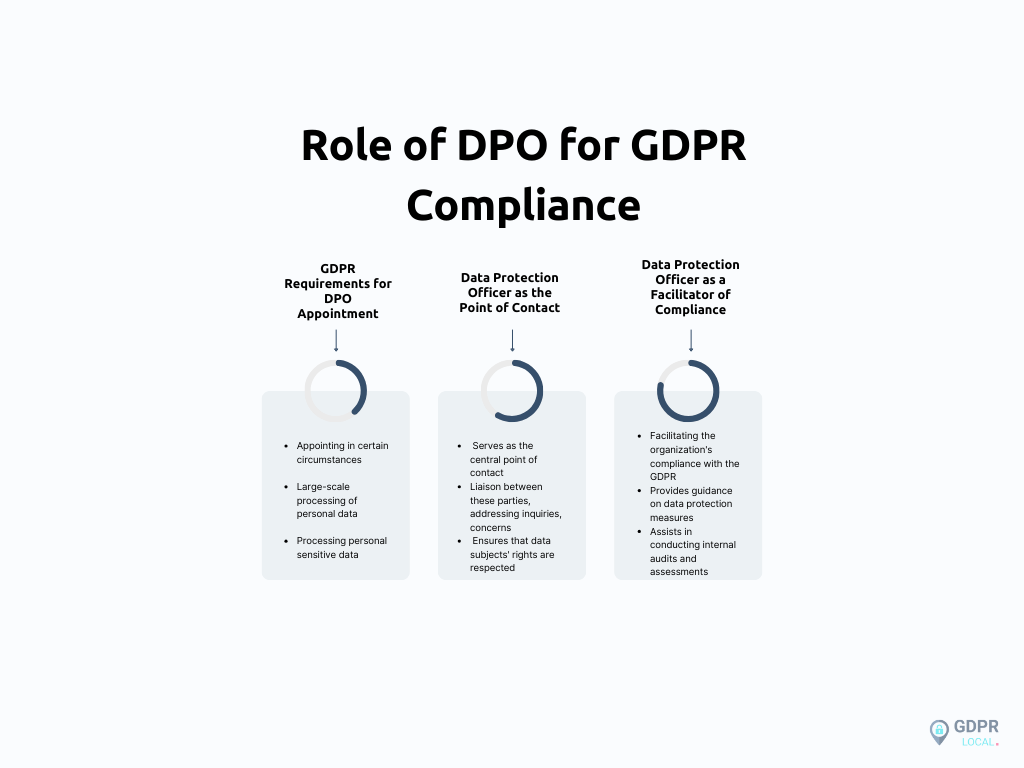
Under the GDPR, organisations must appoint a DPO in certain circumstances. These include situations where the organisation is a public authority or body, where the organisation’s core activities involve large-scale processing of personal data, or where the organisation processes sensitive personal data on a large scale.
How does the DPO act as a point of contact?
The DPO is the central point of contact between the organisation, data subjects, and regulatory authorities. They act as a liaison between these parties, addressing inquiries, concerns, or requests related to data protection. The DPO makes sure data subjects’ rights are respected and that the organisation responds appropriately to requests for information, access to data, or rectification of data.
How does the DPO facilitate compliance?
The DPO helps the organisation comply with the GDPR. They give guidance on data protection measures, advise on the development and rollout of policies and procedures, and monitor the organisation’s compliance efforts. The DPO also helps run internal audits and assessments to identify areas for improvement and ensure ongoing compliance with the GDPR.
What is the DPO’s role in data subject rights?
Data subjects have certain rights under data protection laws, and the DPO plays a significant part in protecting and fulfilling them. Here are some aspects of that role:
How does the DPO protect data subject rights?
The DPO makes sure data subjects’ rights, such as the right to access, rectify, erase, or restrict the processing of their personal data, are respected and protected. They guide the organisation on handling data subject requests and make sure appropriate processes are in place to fulfil these requests within the required timeframes.
How does the DPO handle data subject requests?
The DPO helps the organisation handle data subject requests effectively and efficiently. They give guidance on verifying data subjects’ identities, assessing the validity of requests, and responding to requests in a transparent and timely manner. The DPO also makes sure data subjects are informed of their rights and the process for exercising them.
What is the DPO’s role in data breach management?
Data breaches can have serious consequences for organisations and individuals. The DPO manages data breaches and makes sure appropriate action is taken to reduce their impact. Here are some key aspects of that role:
How does the DPO handle data breach notification?
In the event of a data breach, the DPO assesses the severity of the breach and decides whether it must be reported to the relevant supervisory authority and affected data subjects. They guide the organisation through the data breach notification process, ensuring compliance with the notification requirements and timelines set out in data protection laws.
How does the DPO coordinate the breach response?
The DPO coordinates the organisation’s response to data breaches, working closely with relevant departments, such as IT, legal, and communications. They help investigate the breach, assess the root causes, and recommend measures to prevent similar incidents. The DPO also makes sure affected data subjects receive appropriate support and guidance after a data breach.
What is the DPO’s role in Privacy by Design?
Privacy by Design is a fundamental principle of data protection that builds privacy considerations into the design and development of systems, processes, and products. The DPO plays a part in putting Privacy by Design principles into practice within an organisation. Here are some key aspects of that role:
How does the DPO implement Privacy by Design?
The DPO guides the organisation in putting Privacy by Design principles into practice throughout the lifecycle of data processing activities. They advise on adding privacy safeguards, conducting privacy impact assessments, and putting technical and organisational measures in place to protect personal data. The DPO also makes sure privacy considerations are taken into account during the development of new products or services.
How does the DPO contribute to Privacy by Design?
The DPO contributes to the organisation’s Privacy by Design efforts by providing expertise on data protection requirements, identifying potential privacy risks, and proposing measures to reduce those risks. They work with cross-functional teams to build data protection considerations into the design and development processes. The DPO also monitors the organisation’s compliance with Privacy by Design principles and recommends improvements where necessary.
What is the DPO’s role in vendor management?
Organisations often rely on third-party vendors or service providers for various data processing activities. The DPO makes sure vendors comply with data protection requirements. Here are some key aspects of that role:
How does the DPO evaluate and select vendors?
The DPO takes part in evaluating and selecting vendors to make sure they meet the organisation’s data protection requirements. They assess the vendor’s data protection policies, practices, and safeguards to check they match the organisation’s data protection standards. The DPO also reviews vendor contracts and agreements to make sure appropriate data protection clauses are included.
How does the DPO monitor vendor compliance?
The DPO monitors vendors’ compliance with data protection requirements throughout the vendor relationship. This includes conducting regular audits, assessments, or reviews to verify the vendor’s compliance with contractual obligations and relevant data protection laws and regulations. They also work with the organisation’s legal or procurement departments to address any non-compliance issues identified during vendor management.
What is the DPO’s role in employee training?
Educating employees about data protection principles and practices matters for compliance within the organisation. The DPO plays a key role in developing and delivering data protection training programmes.
Why does data protection training matter?
The DPO recognises the importance of data protection training and pushes to include it in the organisation’s training and development programs. They develop training materials, run training sessions, and raise employees’ awareness of their data protection responsibilities. The DPO works closely with HR and training departments to build data protection training into onboarding and ongoing employee development.
How does the DPO collaborate with HR and training teams?
The DPO works closely with HR and training departments to identify training needs, develop relevant content, and deliver effective data protection training programmes. They give guidance on building data protection principles into HR policies and practices, including data retention and employee data management. The DPO also helps develop data protection awareness campaigns, which builds a culture of data protection within the organisation.
Schlussfolgerung
The role of the Data Protection Officer matters for compliance with data protection regulations and for safeguarding individuals’ rights and privacy. Their responsibilities include educating the organisation, monitoring compliance, supporting data subject rights, managing data breaches, and promoting privacy by design.
By following hiring best practices, organisations can make sure a qualified, independent professional oversees their data protection efforts. With the DPO’s expertise and collaboration across departments, organisations can manage data protection requirements and build a culture of compliance and privacy.
Remember, if you need DPO services, we are here to help.
We provide virtual Data Protection Officer services to a diverse range of companies and support your ongoing compliance with data protection regulations.
Contact us today to discuss your requirements and find out how we can help you meet your data protection obligations.

About the Author
Zlatko Delev
Country Manager & Head of Commercial — GDPRLocal
Zlatko specialises in data protection compliance, ISMS strategy, and AI law. With a legal background and hands-on experience supporting organisations globally, he helps businesses navigate GDPR, the EU AI Act, and international privacy frameworks.
Frequently Asked Questions
What is the role of a Data Protection Officer (DPO)?
A Data Protection Officer oversees an organisation’s compliance with data protection regulations. Responsibilities include educating employees, auditing data protection measures, managing data breaches, facilitating data subject requests, and acting as a liaison with regulatory authorities.
Does my organisation need to appoint a Data Protection Officer?
Under GDPR, you must appoint a DPO if you are a public authority, regularly process large-scale personal data, or handle sensitive personal data extensively. Even if not legally required, appointing a Data Protection Officer (DPO) helps ensure effective data protection compliance.
Should I appoint an internal or external DPO?
This choice depends on your organisation’s size, resources, and specific needs. An internal DPO has in-depth organisational knowledge, while an external DPO provides independent, specialised expertise and flexibility. Both approaches have advantages, and the best choice aligns with your operational requirements.

About the Author
Head of Commercial & Country Manager
Zlatko Delev is Head of Commercial and Country Manager at GDPRLocal, where he leads the company’s commercial strategy and market presence. He brings international experience across sales, marketing, and customer success, along with a legal background from his studies at Iustinianus Primus Law School in Skopje, Macedonia.
Zlatko sits at the front line of GDPRLocal’s client relationships, guiding organisations through the first stages of their compliance journey and helping them understand where they stand and where they need to go on GDPR, information security, and the emerging landscape of AI regulation. His role bridges commercial strategy with practical data protection knowledge, ensuring clients get clear, actionable direction from their very first conversation with GDPRLocal.
Alongside his commercial focus, Zlatko has trained extensively in project management and organisational leadership, including risk management, stakeholder communication, agile methodology, and digital marketing, a broad skill set that supports his structured, delivery-focused approach to growing GDPRLocal’s business internationally.